


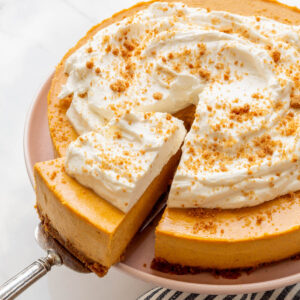
Learn how to make the best baked pumpkin cheesecake with a baked graham cracker crumb crust with this easy recipe. This decadent pumpkin-flavoured cheesecake is made with pumpkin purée and pumpkin spice mix and baked in a water bath so it doesn't crack! Great dessert for Thanksgiving that you can make ahead and freeze!
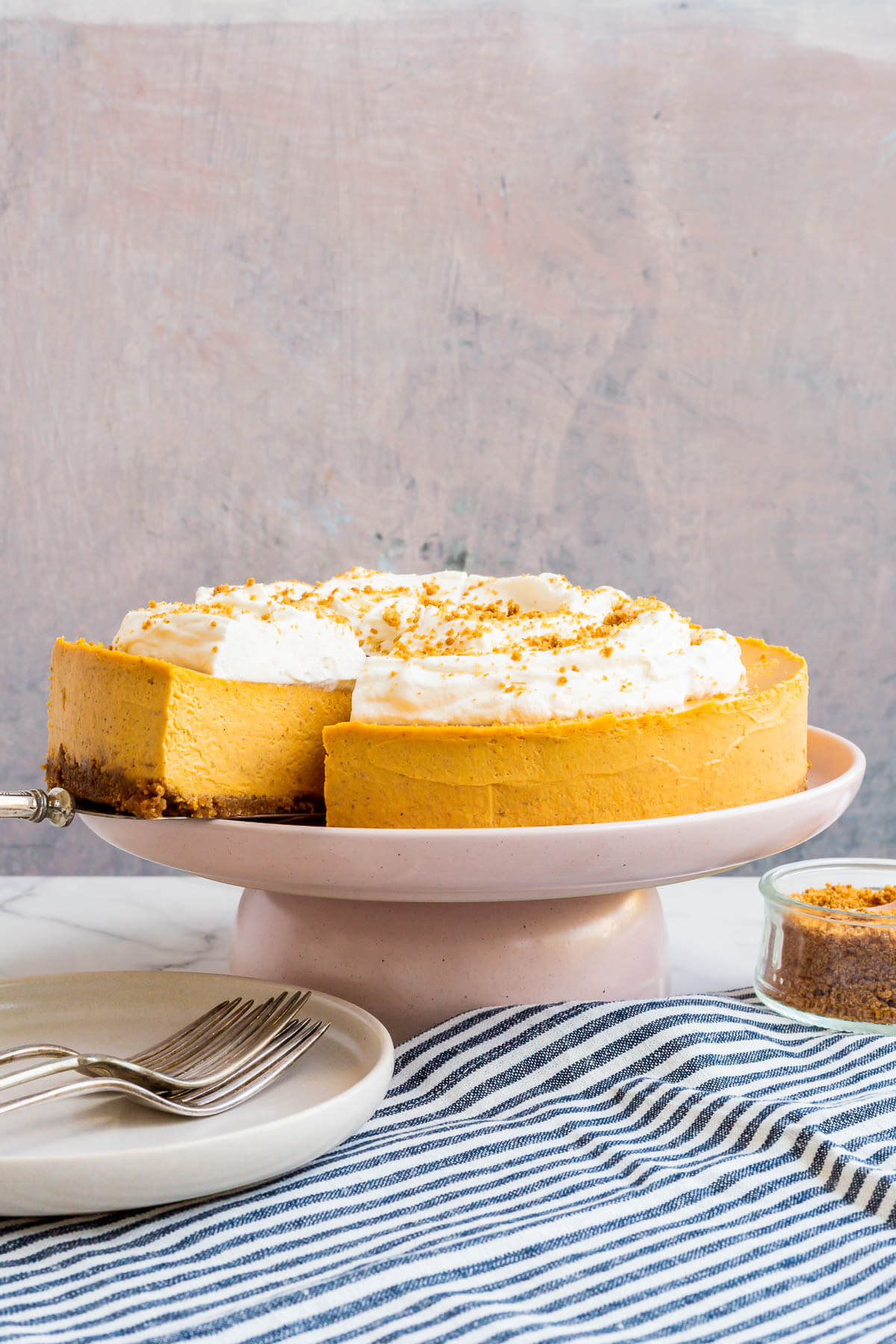
Some people like to serve pie at Thanksgiving (like this pumpkin pie without evaporated milk or a maple bourbon sweet potato pie). Others prefer to bake a pumpkin cheesecake instead!
This is my version of baked pumpkin cheesecake. I always stick to the same ratio (roughly) for baked cheesecake fillings. As you may notice, this recipe is very similar to my baked vanilla cheesecake and the delicious coffee cheesecake with cardamom.
Jump to:
Ingredients To Make Baked Cheesecake With Pumpkin Purée
Here's what you need to make a pumpkin-flavoured cheesecake:
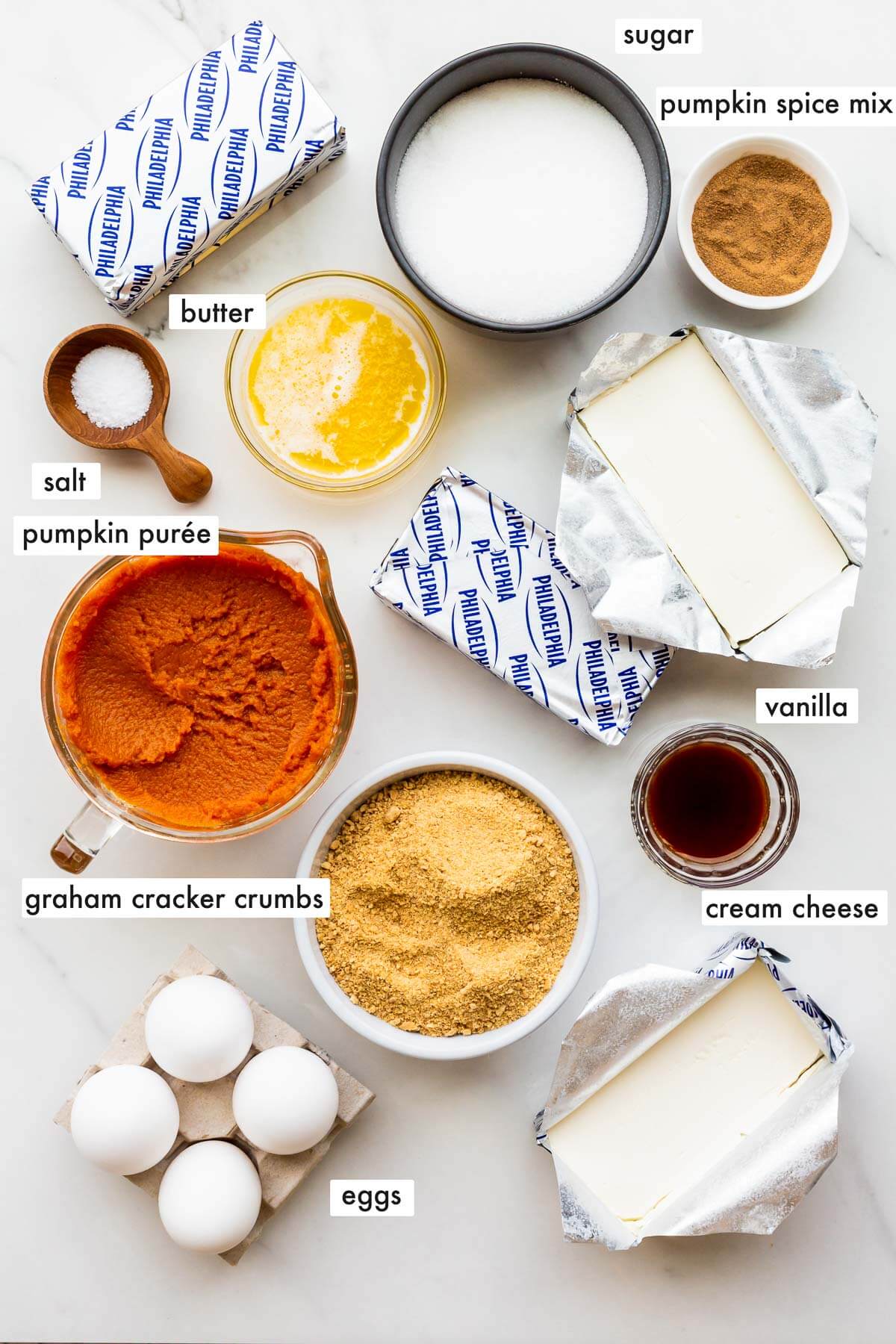
- pumpkin—you can use canned pumpkin purée or strained homemade pumpkin purée (water removed). Do not use canned pumpkin pie filling which has spices and other additives that will affect the taste.
- sugar—I used white sugar in the crust and the filling, but light brown sugar would also work
- eggs—I bake with large eggs. If you use eggs of a different size, this may affect the texture and set of the pumpkin cheesecake filling
- cream cheese—use Philadelphia full-fat cream cheese sold in blocks. In Canada, each block is 250 grams. Do not use whipped cream cheese or spreadable cream cheese. Do not use low-fat cream cheese.
- pumpkin spice mix—this is also called pumpkin pie spice. You can make a homemade version by combining cinnamon, ginger, nutmeg, cloves, and/or allspice.
- butter—use unsalted butter for the crust. If using salted, you may want to add less salt to the crust.
- vanilla—you can use either vanilla extract or vanilla bean paste (equal amounts)
- graham cracker crumbs—use store-bought or homemade graham crackers for the crumb crust.
Please see the recipe card for the exact ingredients and quantities.
Substitutions and Variations
Here are a few ways you may want to change the recipe:
- Sweet potato - instead of pumpkin purée, you can try using sweet potato purée.
- Squash - you can use any mashed sweet squash for this cheesecake. I find kabocha squash is very flavourful. Make sure to strain the homemade purée through a cheesecloth to remove any excess moisture in the filling.
- Graham cracker cookie alternatives - the cookie crust can be made with social tea biscuits or chocolate wafers. You can also use speculoos.
- Sour cream - you can replace 250 grams (1 block) of cream cheese with 250 mL (1 cup) of full-fat sour cream (14 % fat)
With any substitution, you may have to do some testing and tweaking to get the dessert just right with your changes!
How To Make a Pumpkin-Flavoured Cheesecake
You can make the cheesecake filling in either a large food processor or a stand mixer with the paddle attachment. The goal is to create a smooth filling without incorporating too much air so that the filling doesn't expand and crack as it bakes and cools. If you use a large food processor, the volume will likely exceed the maximum fill line, so beware of leaks. Use a stand mixer if you are worried about spills.
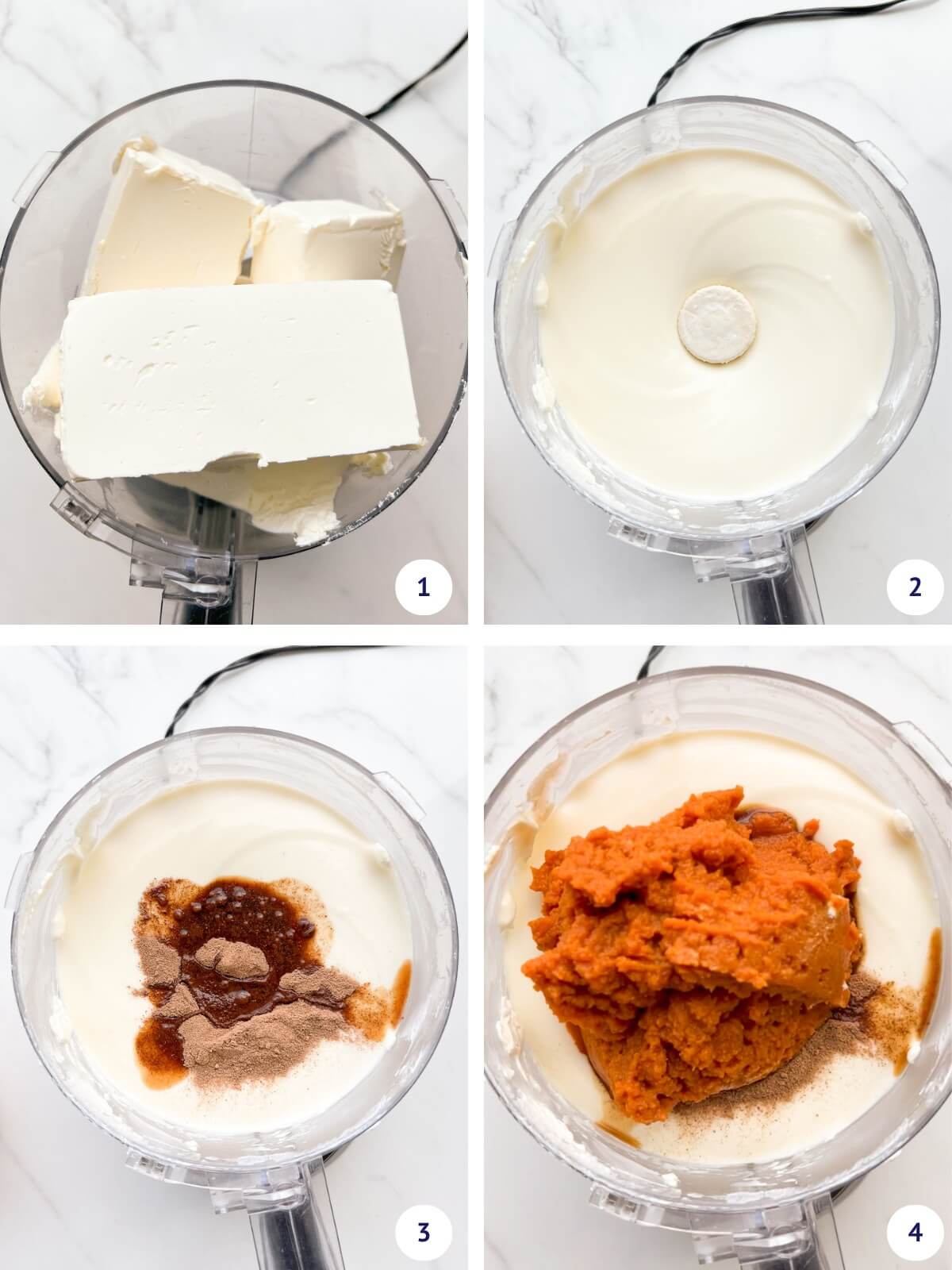
Step 1—Start by combining the blocks of cream cheese in either a food processor (image 1) or stand mixer fitted with paddle attachment. Blend them together until smooth and creamy (image 2), scraping down the sides as needed with a spatula and adding the granulated sugar partway through. Add the pumpkin spice mix and vanilla (image 3) and the pumpkin purée (image 4) and mix until the filling is even and smooth.
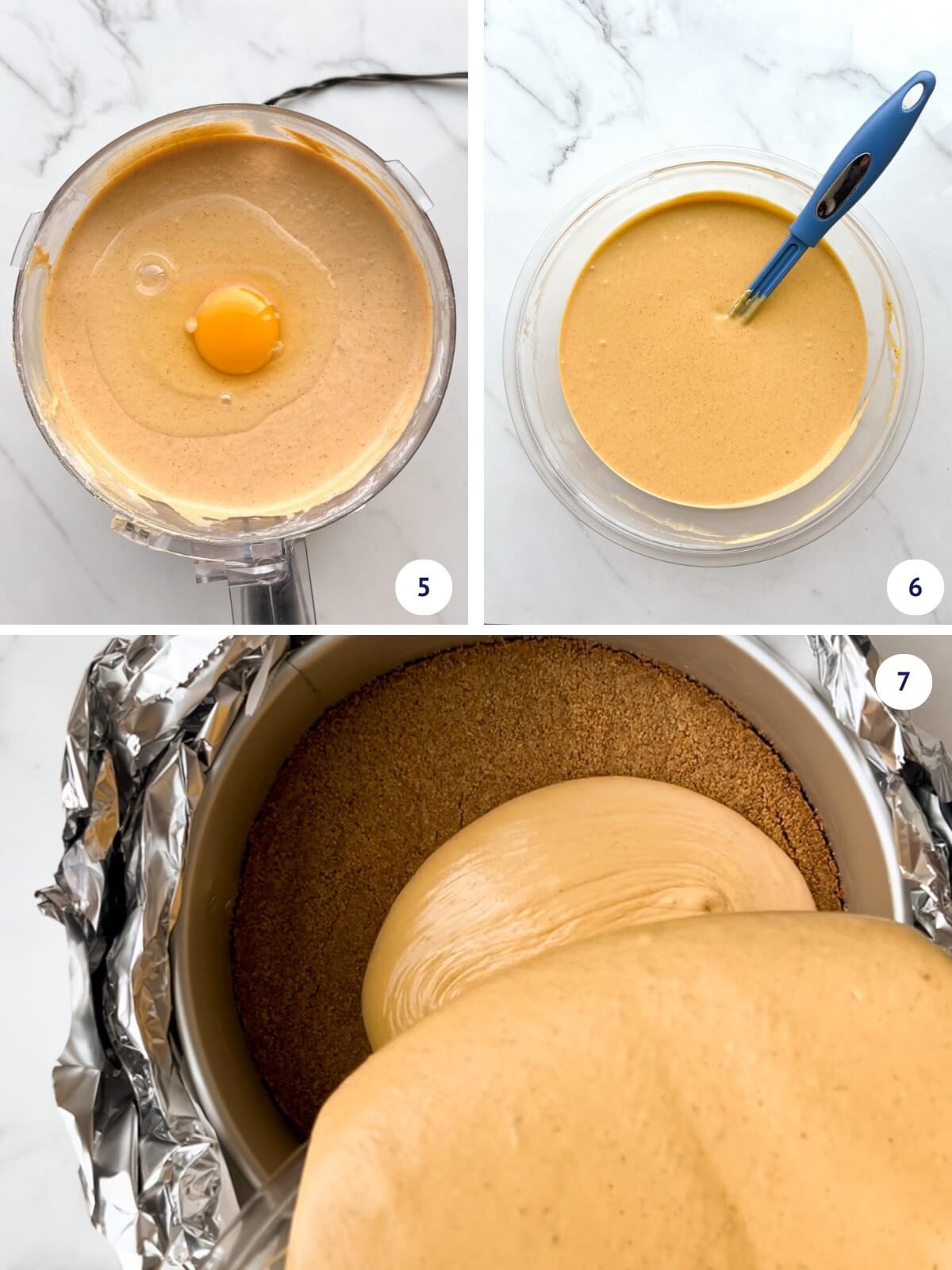
Step 2—Mix in the eggs, one at a time (image 5), then strain the mixture into a bowl (image 6). Pour the pumpkin cheesecake filling over a baked 9-inch graham cracker crust in a springform pan (image 7).
Tip—Make a graham cracker crumb crust and bake it before making the filling. Wrap the springform pan in two layers of foil after baking the crust to prevent moisture from getting into the pan when we set it in a water bath to bake the filling.
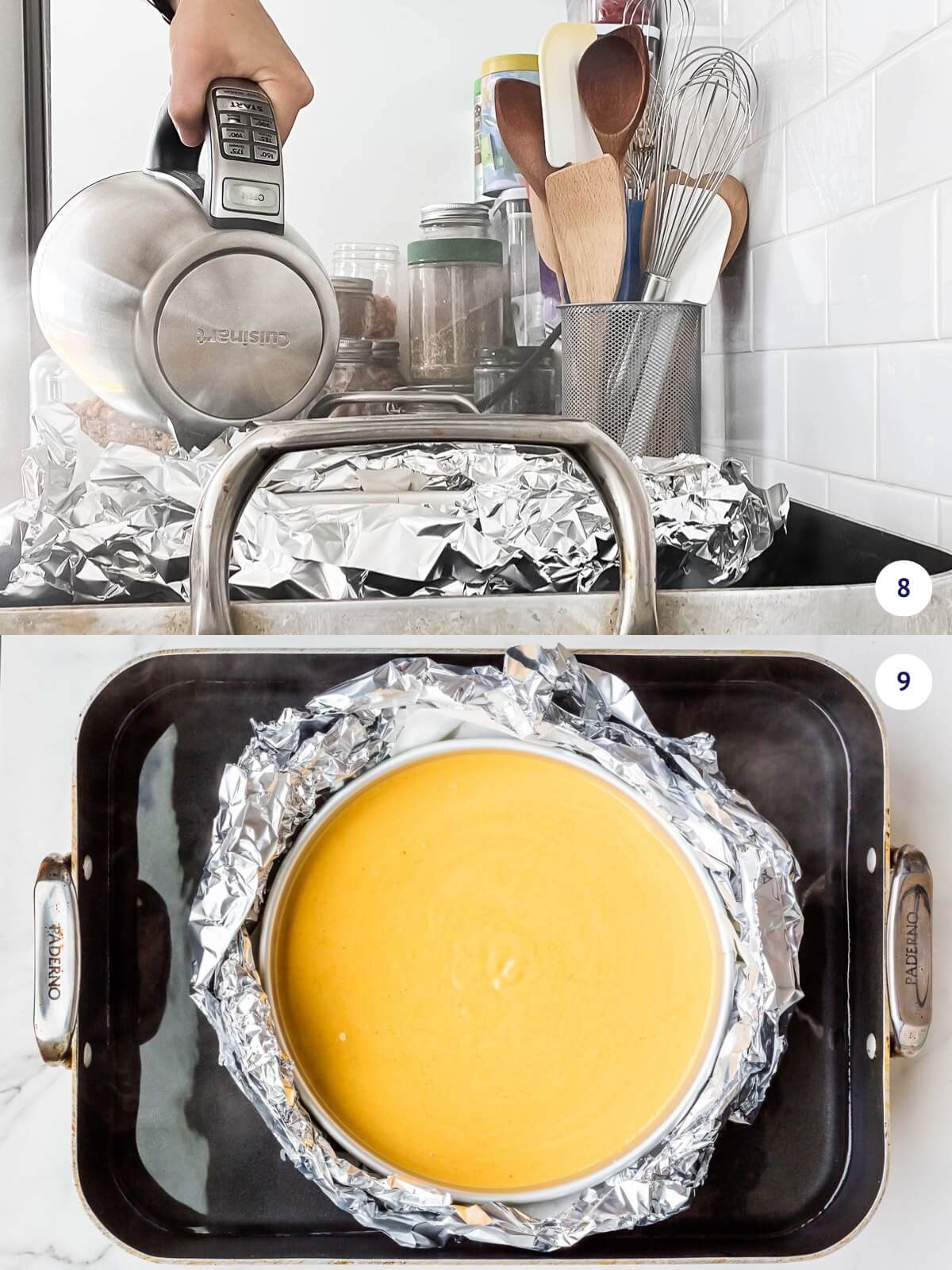
Step 3—Place the foil-wrapped cheesecake pan in a roasting pan and fill it with boiling water carefully (image 8).
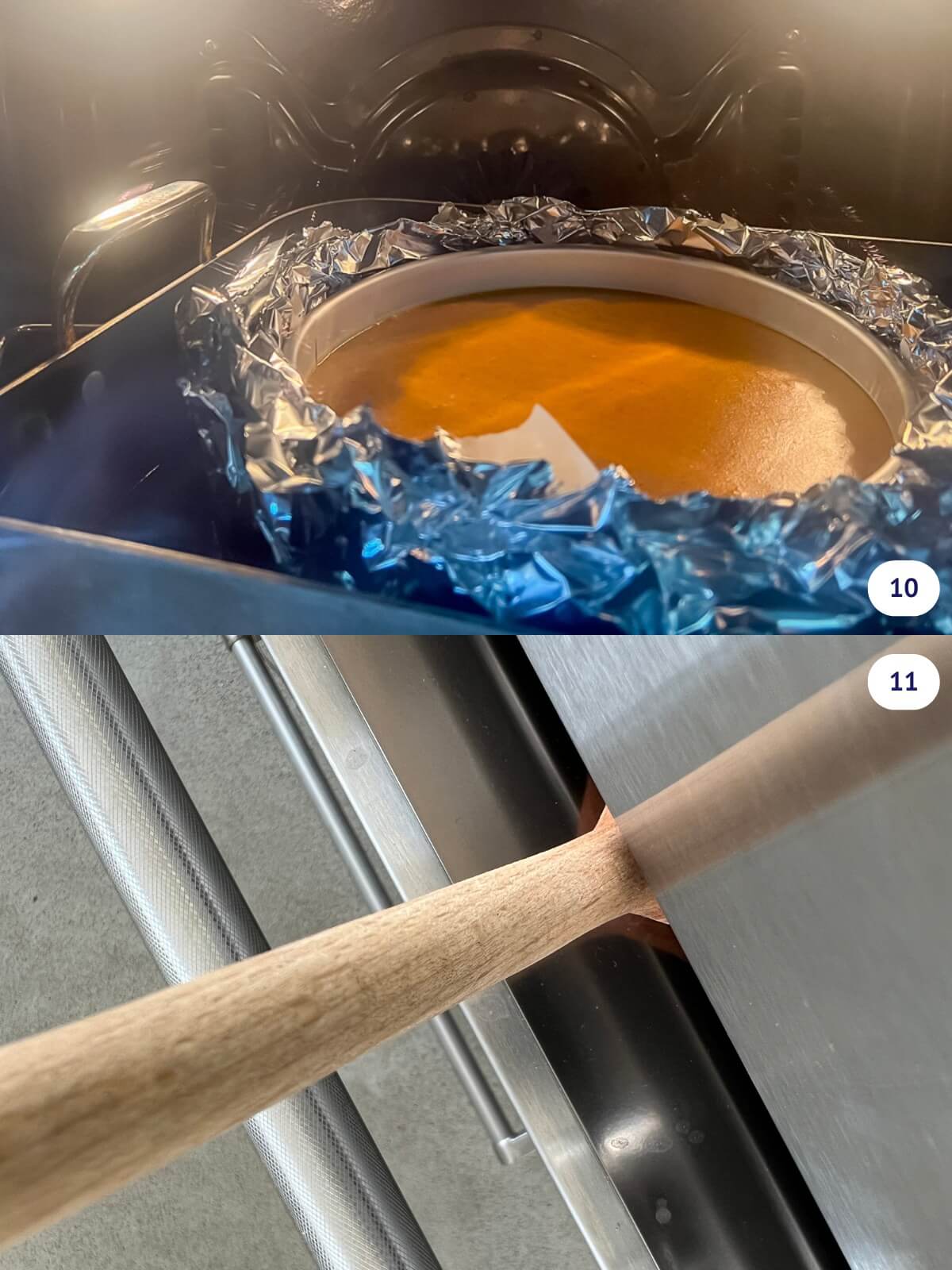
Step 4—Bake the cheesecake until the edges are set, but the centre jiggles ever so slightly (image 10). Cool the cheesecake for 2 hours in the oven, propping the door open with a wooden spoon (image 11).
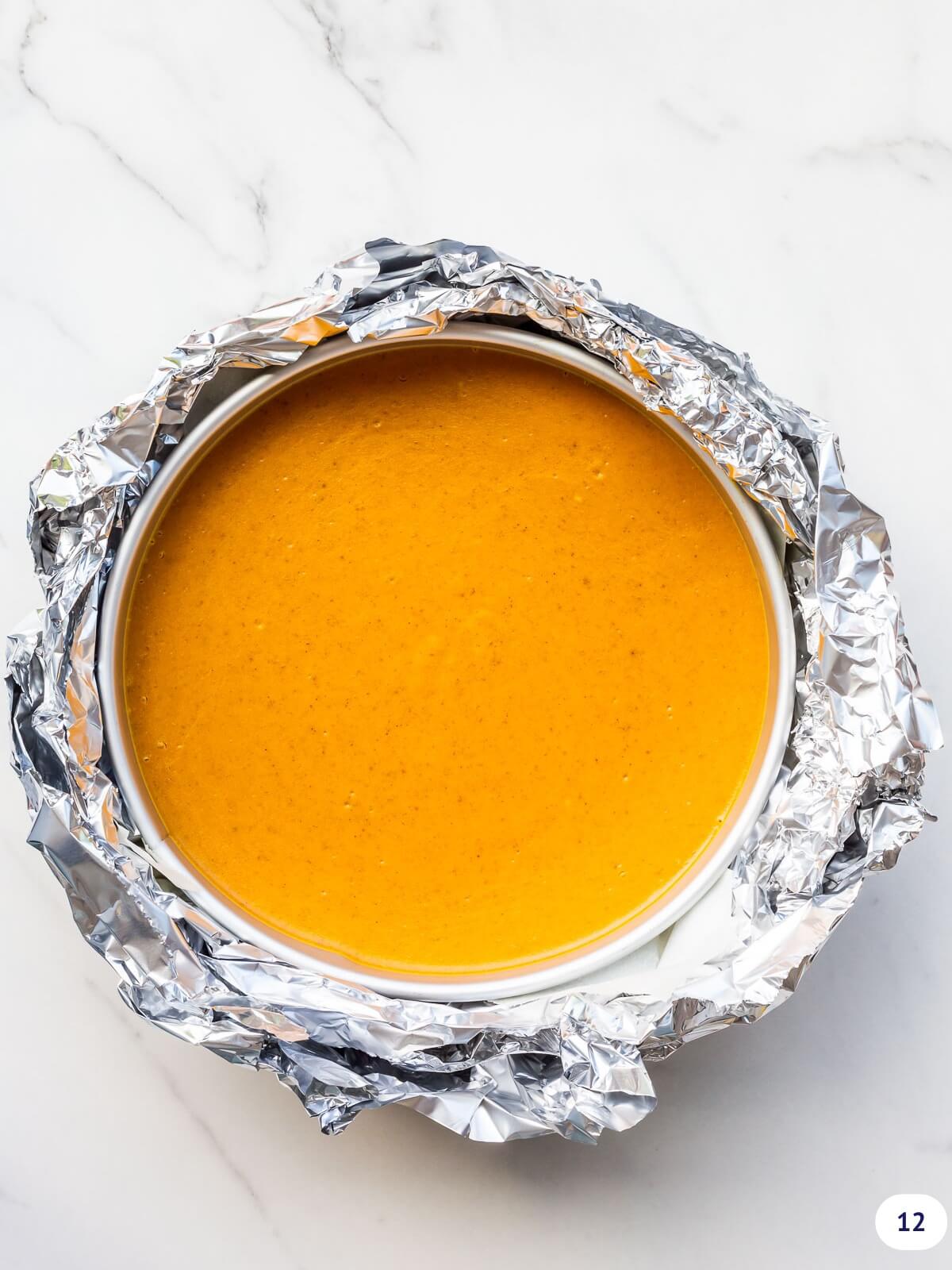
The cheesecake should not have any cracks at this point (image 12) if you cooled it slowly. If you use a thermometer to monitor the baking, the hole created in the centre to check the temperature may result in a crack.
Cool the cheesecake in the fridge overnight.
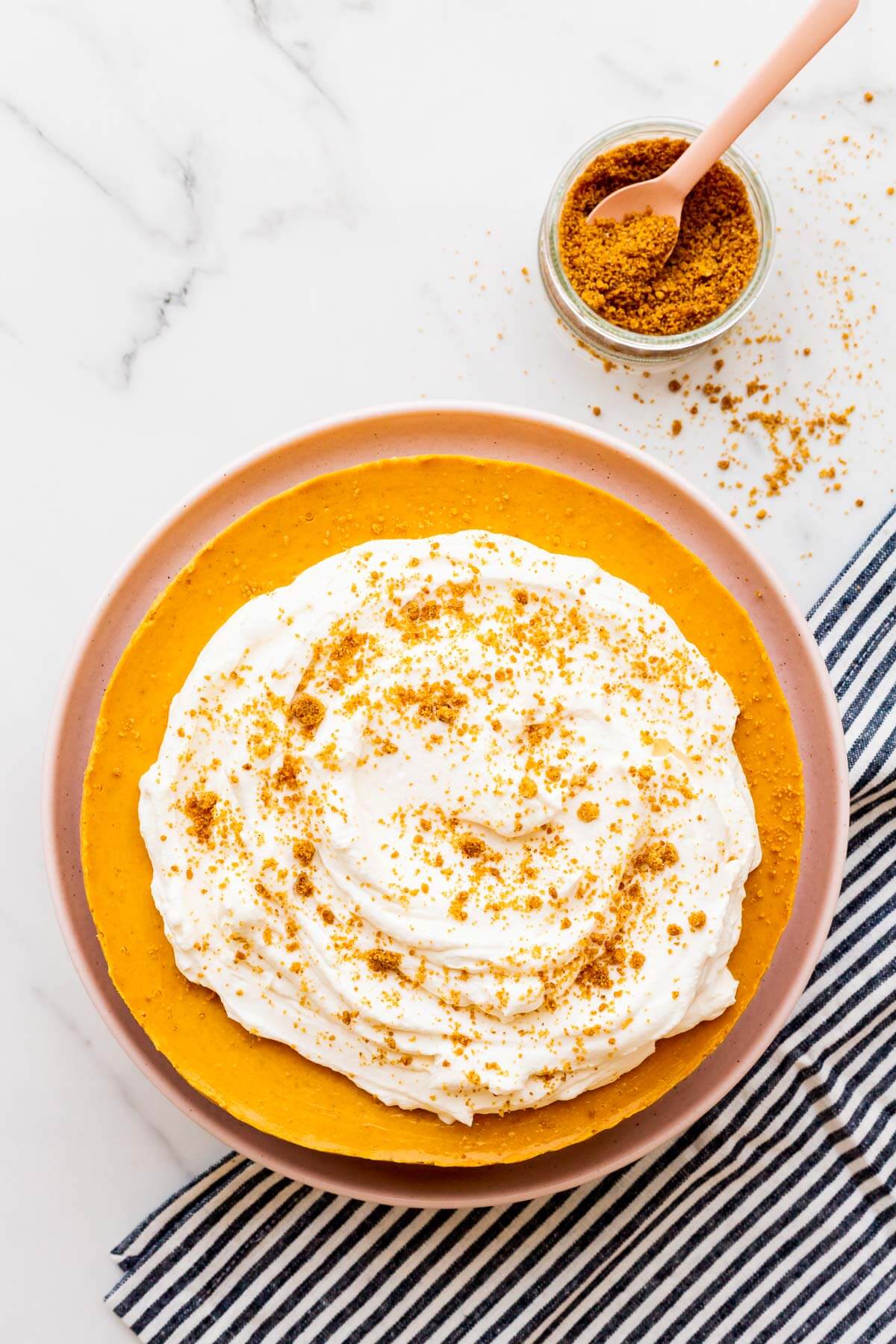
Hint: If your cheesecake develops a crack, hide it under a thick layer of lightly sweetened whipped cream or, even better, maple whipped cream! Nobody will notice it!
Storage
Store cheesecake in the refrigerator, lightly covered. You can also freeze it, though I'd recommend freezing it without the whipped cream on top if you choose this.
You can make this pumpkin cheesecake a day or two ahead of serving it, which makes it a great Thanksgiving dessert because it doesn't require the oven on the big day!
Top Cheesecake Baking Tips
Desserts like this pumpkin cheesecake aren't hard to bake, though they take a long time to bake and cool down before you can serve them. The hardest part is waiting! Here are my top tips so that you can bake a perfect cheesecake every time:
- Do not overwhip the filling. Air in the filling will cause the cheesecake to crack.
- Strain the filling through a fine-mesh sieve to remove any lumps to ensure a smooth, creamy texture.
- Do not skip the water bath! The water bath insulates the edges of the cheesecake pan so that it bakes slowly, with control, and perfectly flat! This ensures it doesn't crack!
- Drop the oven temperature to ensure the cheesecake filling sets slowly.
- Bake until the edges and surface are set, but the centre may still jiggle a little. It will continue to bake as it cools.
- Run a pairing knife around the edge, between the cheesecake and pan, before unmoulding it to release the sides.
- If the surface of the cheesecake sweats in the fridge, use some paper towel to soak up any moisture. In fact, you can store the cheesecake in the fridge with a sheet of paper towel directly on the surface to absorb moisture.
- If the cheesecake cracks, cover the damage with whipped cream!
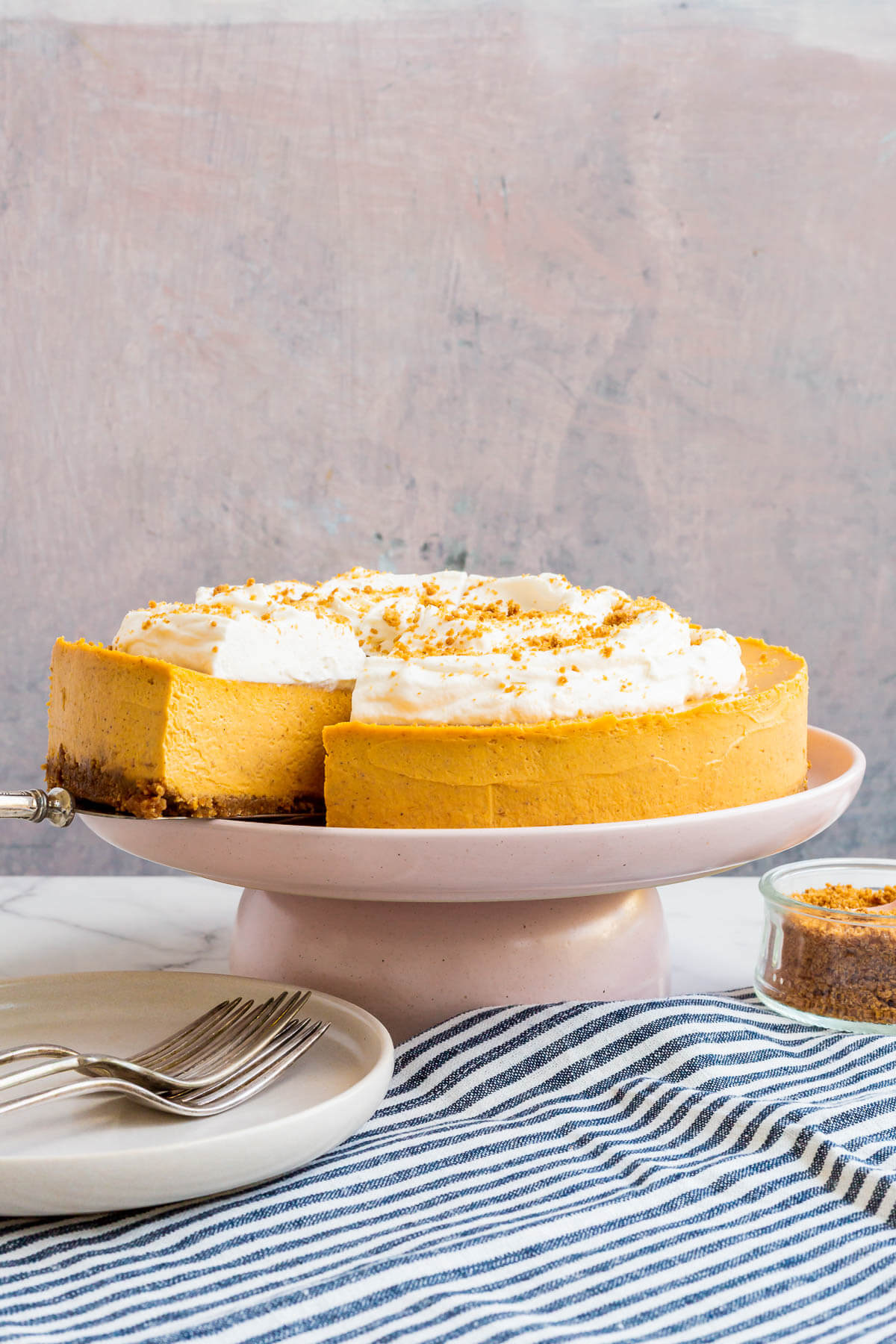
Serving Suggestions
I love this pumpkin cheesecake topped with lightly-sweetened whipped cream, but you can also serve it plain or with some cardamom ice cream or spiced chai ice cream. It's also great with salted caramel sauce! Yum!
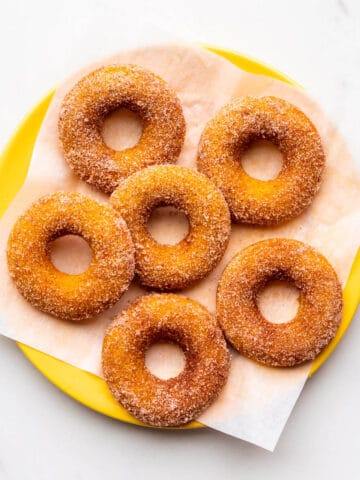
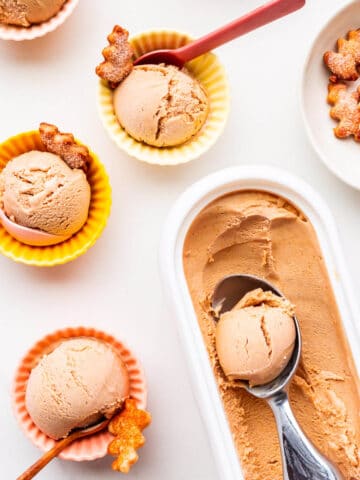
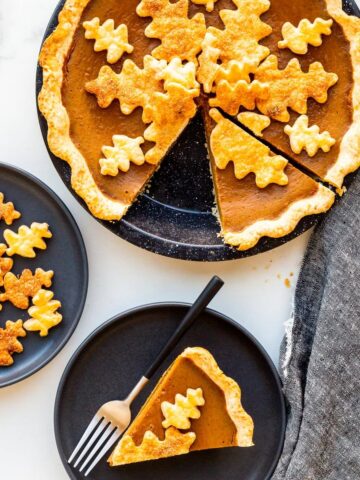
Other Pumpkin Recipes
If it's pumpkin spice season, here are a few pumpkin baking recipes to try:
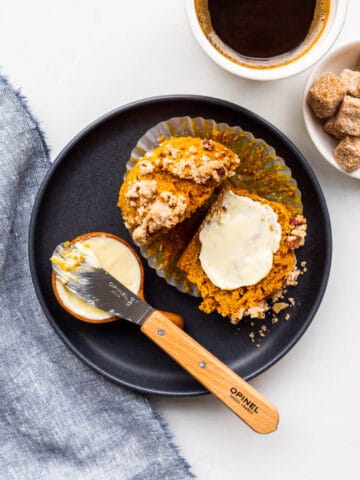
If you tried this recipe for baked pumpkin cheesecake (or any other recipe on my website), please leave a ⭐ star rating and let me know how it went in the comments below. I love hearing from you!
📖 Recipe
Baked Pumpkin Cheesecake
Equipment
Ingredients
Baked Graham Cracker Crust For 9-inch Cheesecakes
- 150 grams graham cracker crumbs
- 26 grams granulated sugar
- 0.625 mL Diamond Crystal fine kosher salt
- 58 grams unsalted butter melted
Vanilla Bean Cheesecake Filling
- 1 kg Philadelphia cream cheese (full fat, regular) use the block kind (see note), softened
- 250 grams granulated sugar
- 426 grams pumpkin purée
- 12.5 mL pumpkin spice mix
- 10 mL vanilla extract
- 4 large egg(s)
- boiling water to create the water bath in the roasting pan
- sweetened whipped cream optional but makes a nice garnish
Instructions
- Preheat the oven to 350 °F (175 °C). Line a 9-inch springform pan with parchment paper. Boil a whole kettle of water (1.75–2 L).
- In a medium bowl, combine the graham cracker crumbs, 26 grams of sugar (2 tbsp) and salt. Mix them together with a fork.
- Pour the melted over top and stir well until all the ingredients are moistened and the mixture begins to clump.
- Transfer the crust mixture to your prepared pan and spread it out from edge to edge in an even layer, flattening and pressing it out with a flat-bottomed glass to create a smooth, tight crust.
- Bake the crust until the edges just begin to brown (10–15 minutes). Take out of the oven and let cool.
- Drop the oven temperature to 325 °F (165 °C).
- Wrap the outside of the cheesecake pan in three layers of foil so that it is well protected.
- Prepare the cheesecake filling by creaming the blocks of cream cheese together until smooth and creamy, then mix in the sugar.
- Add the pumpkin purée, spices, and vanilla, and mix in.
- Mix in the eggs, one at a time, only adding the next egg when the previous one has been completely incorporated.
- Strain the filling to remove any lumps if necessary, then pour it over your baked cheesecake crust.
- Place the foil-wrapped cheesecake pan in the roasting pan and pour water in the roasting pan (making sure to avoid splashing the cheesecake filling!). Fill with enough water to come halfway up the cheesecake pan.
- Place the roasting pan in the oven, carefully, and bake the cheesecake until set but the centre remains a little jiggly (this takes about 75 minutes for me).
- Turn the oven off when the cheesecake is done baking and prop the oven door slightly to allow the oven to slowly cool down. Leave the cheesecake in the oven with the door propped open for about 2 hours to cool completely.
- Take the cheesecake out of the water bath and transfer it to the fridge to chill for at least 4 hours, if not overnight, before slicing and serving.
Notes
- For the crust, I prefer to use graham cracker crumbs but this will also work with speculoos cookies, chocolate wafer crumbs (Oreo crumbs), or even social tea biscuits. Use any dry cookies/biscuits for the crumbs.
- I bake with Diamond Crystal fine kosher salt. If using table salt, add half the amount or the recipe may be too salty.
- For the cream cheese, use full-fat cream cheese sold in block form. Do not use whipped, light, or spreadable cream cheese as these products may have more water or fat.
- You can flavour the cheesecake filling with vanilla bean paste (preferred) or vanilla extract. You could also scrape a vanilla bean (or half a large bean) and add that to the filling instead.
- Use a water bath made from a roasting pan and boiling water to bake the cheesecake. Make sure to wrap the springform pan in three layers of aluminum foil to prevent water from seeping into the pan and to prevent the crust from getting soggy. Alternatively, you could use a 9-inch round cake pan with 3-inch sides, making sure to line the bottom with parchment paper. You will have to flip the cheesecake onto a parchment paper-lined board, upside-down, to get it out of the pan, which may ruin the smooth finish on top.
Leave a Reply