

Baking powder is an essential ingredient in baking that helps create lighter cakes and cookies. In this post, we'll cover everything you need to know about this essential leavening agent: the difference between baking powder and baking soda, single-acting vs. double-acting baking powders, how to use it, and even how to make your own homemade baking powder.
Jump to:
What It Is
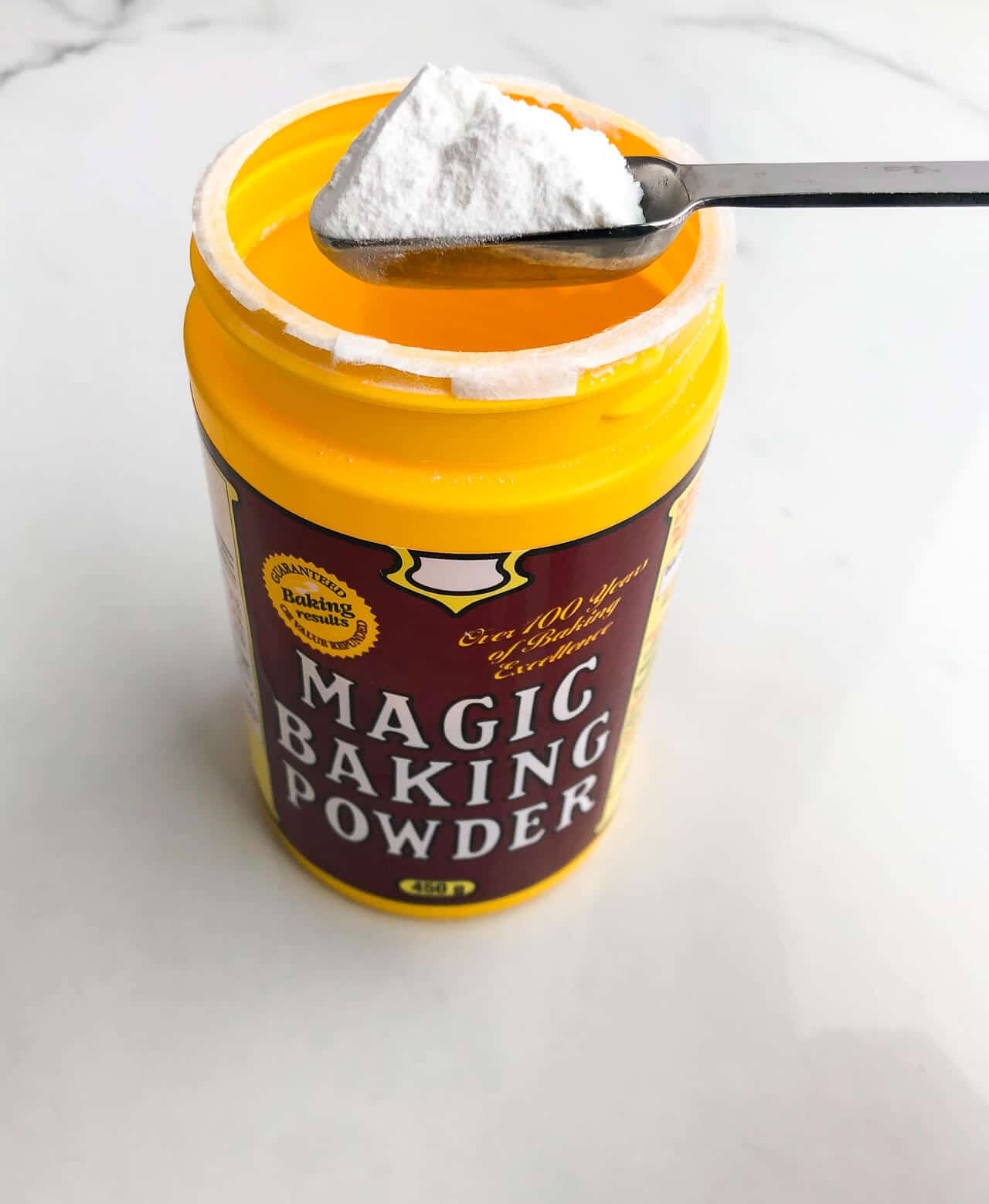
Baking powder is a chemical leavening agent that combines sodium bicarbonate (baking soda) and an acid (or even two acids!) in one single dry, white powder. It's sold in grocery stores and bulk food stores.
It's an easy way to get your cakes to rise without having to whip egg whites, fiddle with yeast, or worry about adjusting pH because everything you need to make your baked goods rise is in the powder.
🧪 How Baking Powder Works
When you add baking soda to a cake recipe, you'll notice that you also have to add an acidic ingredient (like vinegar, sour cream, buttermilk, etc). On the other hand, when you bake with baking powder, the acid is already present in the commercial powder. All you have to do is whisk (or sift) it with the rest of your dry ingredients. Easy peasy! This classic vanilla cake with milk chocolate frosting is a great example of a cake made with just baking powder.

For baking powder to react and for your cakes to rise, it has to first come into contact with water. As a dry powder, this raising agent is quite stable: the acid and the sodium bicarbonate don't react in the dry powder. It doesn't react until it comes into contact with liquids in your cake batter or cookie dough.
Some baking powders won't react until the mixture is hydrated and heated. This is especially true of double-acting formulas which first react at room temperature when mixed into cake batters and cookie doughs, but they react a second time when the batter or dough is placed in the oven to bake.
The Role of Cornstarch
The ingredients in baking powder are essential for controlling when it reacts. Think about it: if it were to react as a dry powder in the container it's sold in, by the time you add it to your cake batters and cookie doughs, it would be spent. There wouldn't be much left behind but salts.
While the general formula of baking powder can be summarized as baking soda plus an acid, there's more to it than just this. Commercial powders also contain cornstarch to keep it dry and free of lumps. This way it won't react before you use it. Cornstarch prevents the product from reacting prematurely and acts as a sort of "buffer" between the two reagents.
🆚 Double-Acting Versus Single-Acting
The acid in baking powder varies depending on the brand and whether or not the product is single-acting or double-acting.
Single-acting baking powder
Single-acting baking powder is made with one acid, which reacts right away at room temperature when hydrated. Because single-acting powders are so fast-acting, they aren't sold commercially anymore.
An example of single-acting baking powder would be homemade baking powder made with cream of tartar. It reacts quickly at room temperature and over 70 % of it reacts within minutes of mixing into cake batters. When you bake with homemade baking powder, you have to work quickly so that the batter is mixed and baked immediately.
Double-acting baking powder
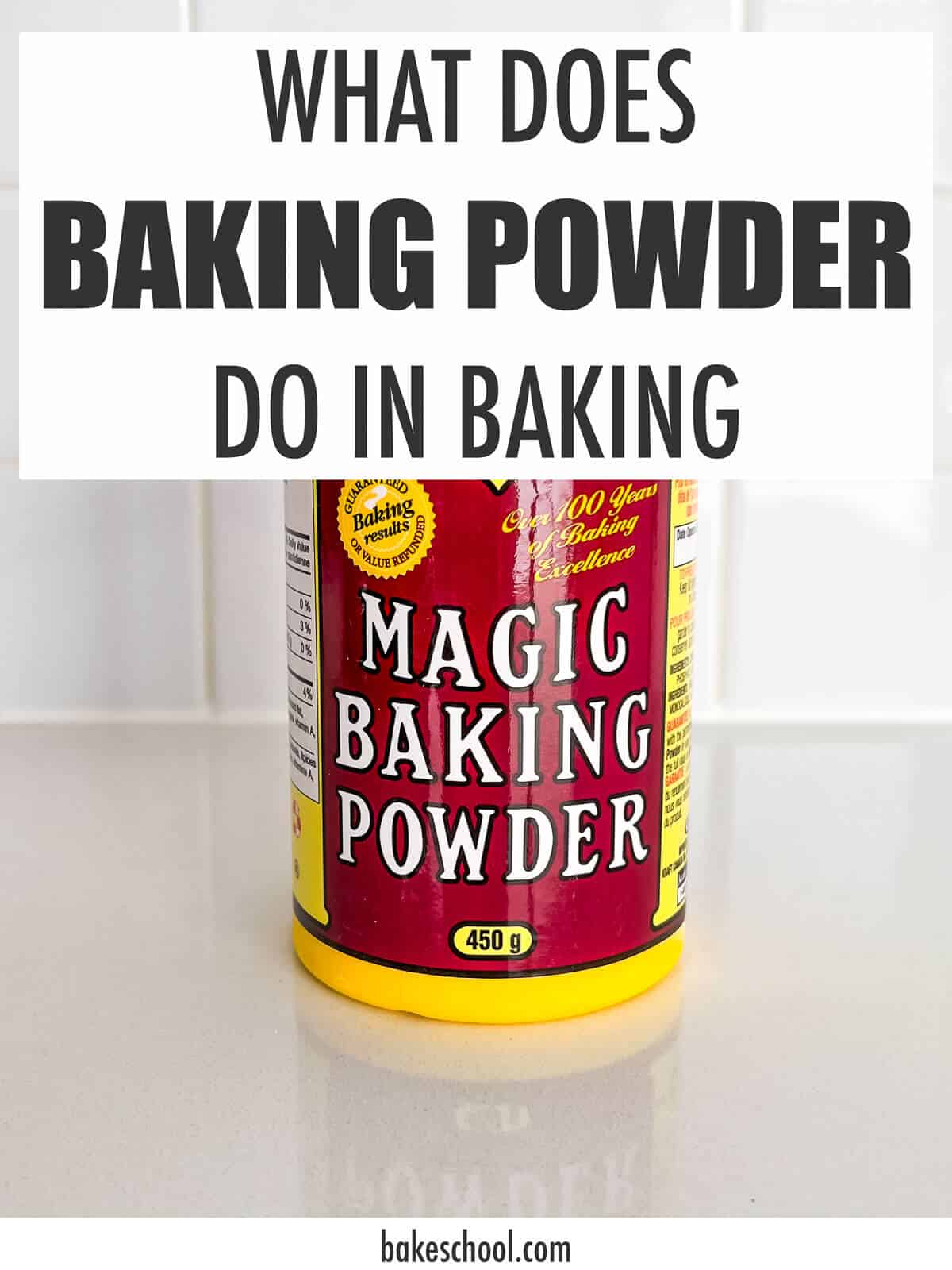
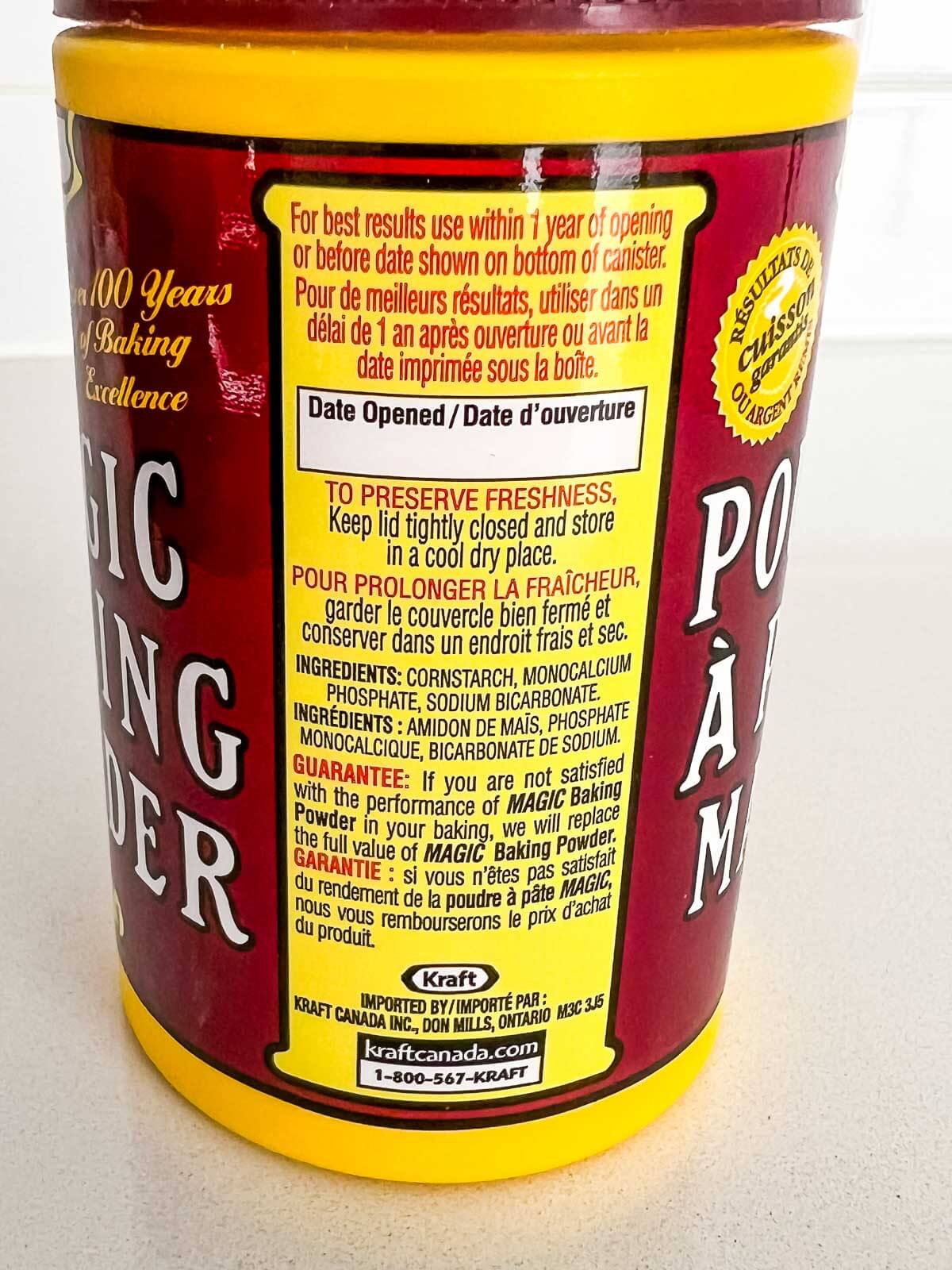
I bake with Magic baking powder, produced by Kraft (like Rumford baking powder sold in the US). It's made of cornstarch, monocalcium phosphate, and sodium bicarbonate. Monocalcium phosphate is the acid that reacts with sodium bicarbonate to produce the gas carbon dioxide, which makes your cakes rise.
Though it seems as though Magic baking powder would be single-acting because it contains only one acid, it's actually double-acting because it reacts in two stages: a portion reacts at room temperature when your batters are first mixed (under 60 % reacts at room temperature), then the rest reacts once heated when you place your cakes and cookies in the oven. So Magic and Rumford react in two separate stages, which is why they are labelled as double-acting.
In the US, other double-acting baking powders include Davis, Kraft Calumet, and Clabber Girl. All these contain the same ingredients as Magic and Rumford, so cornstarch, monocalcium phosphate, and sodium bicarbonate, but Davis, Calumet, and Clabber Girl also contain a second acid, sodium aluminum sulfate. This second acid is slow-acting and only reacts with sodium bicarbonate when the mixture is hydrated and heated.
The baking powder at Bulk Barn is labelled as double-acting, as is Fleischmann's. Both contain sodium acid pyrophosphate, as well as sodium bicarbonate, cornstarch and monocalcium phosphate. Note that sodium acid pyrophosphate is very slow-acting, but the downside to using it is that sodium acid pyrophosphate can impart a bitter aftertaste, which is why it's usually combined with other acids and used sparingly.
The Importance of Double-Acting Baking Powder
Bakeries may depend on double-acting baking powder in their baked goods to ensure that cake batters (or muffin batters) that are made ahead of time can be stored in the refrigerator, but will still rise when the product is baked. The second acid ensures that if your batter waits around a little, your cakes will still have enough chemical leavener leftover to rise in the oven.
Determining It's Double-Acting
Most baking powders sold in stores are double-acting. Many brands will include this information on the label, but some don't. To be sure, you will have to analyze the ingredient label, specifically the acid(s). The ingredient list will inevitably mention cornstarch and sodium bicarbonate. The other ingredients might be
- monocalcium phosphate, in which case the chemical leavener is double-acting.
- both monocalcium phosphate and sodium aluminum sulfate, in which case, it's double-acting.
🥄 How Much to Use—Rule of Thumb
If you've ever debated on how much baking powder to use in a cake recipe, start with this rule of thumb to avoid adding too much to your cakes:
Baking powder to flour ratio: add 5 mL to 6.25 mL (1 teaspoon to 1+¼ teaspoon) baking powder for every 125 grams (1 cup or 250 mL) of all-purpose flour.
In this classic vanilla cake with milk chocolate frosting, I use 2 teaspoons of baking powder for 2 cups of flour (250 g). I use the same ratio for this Earl Grey cake and this sesame raspberry cake, which are all variations of the same basic vanilla cake recipe.
Of course, the amount you need to use will vary depending on the other ingredients in the recipe, which contribute to the total volume of the cake batter, its density, its moisture content, etc, which could mean you may need more or less than what the rule suggests.
Still, this rule of thumb is a good place to start if you are debating the ratio of how much baking powder to flour to add to your cake recipe. If you are making cookies, you might add little to none and instead, add a little baking soda. And don't forget to test your baking powder to check if it's still good.
🫙 Storage And Expiration Dates
Chemical leaveners are fairly shelf-stable under perfect conditions (in a dry, cool place), but can lose potency over time and expire if it's not properly stored.
Storage conditions impact shelf-life
Unlike baking soda, baking powder is a leavening agent that does lose potency over time, especially if it's not stored under perfect conditions (in a sealed container in a cool, dry place):
- if you live in a hot, humid climate, it is more likely to come into contact with humidity
- if you don't have air conditioning, leading to excess heat and humidity in the kitchen
Recall that baking powder is a mixture of sodium bicarbonate, an acid (or several acids), and cornstarch. The cornstarch in the formula is there to help keep the powder as dry and clump-free as possible.
Though baking powder is pretty stable as a dry mix of powders, there's a risk that as you open and shut the container, it will come into contact with tiny amounts of humidity. And when it's wet, it will begin to react.
Expiry dates on packaging
If you read the label carefully, you will notice an expiry date somewhere on the packaging. That doesn't mean your baking powder can't expire before that date. If you've opened the container, you should check to make sure your baking powder is still good, regardless of what the date on the package says. And this goes for baking powders that are expired according to the expiry date on the package. The only way to know for sure is to test the baking powder before baking with it.
Testing If It's Still Good
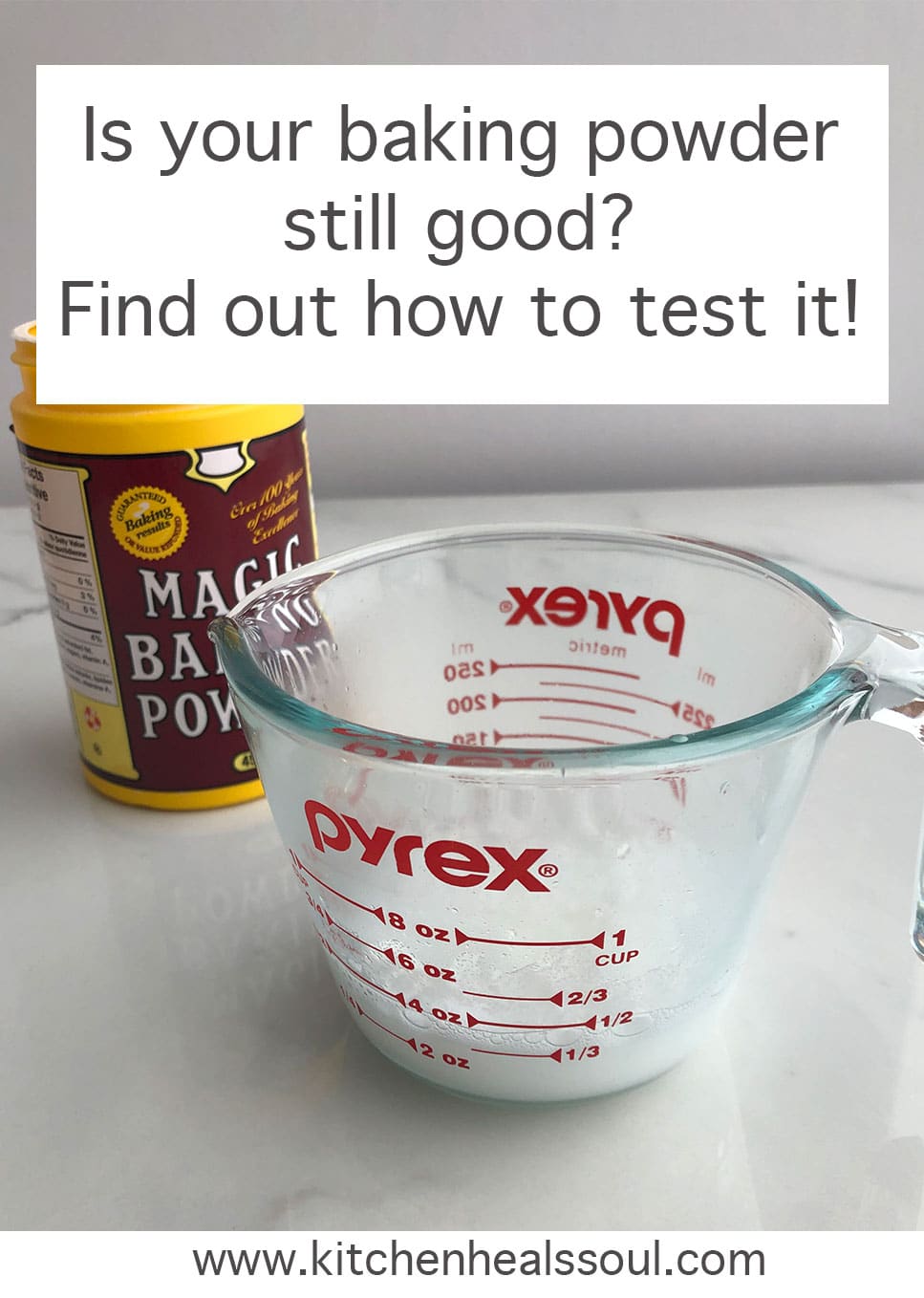
To test if baking powder is still active, combine 1 teaspoon (5 mL) of baking powder with ⅓ cup (80 mL) of hot water. If the mixture fizzes, your leavening agent is still reactive. Make sure that the water is HOT, not lukewarm or cold since the acid requires some heat to react fully.
Some may suggest even using boiling water and if you see nothing with hot water, I'd repeat the test once more but with boiling water. At that point, if you don't see any fizzing or bubbling, your baking powder is expired and you should replace it with a fresh container.
A positive result doesn't indicate the potency
Unfortunately, though you can check to make sure it's still active and reactive, we don't have an easy way at home to measure how potent the leavening agent is. The fact is you can check to make sure baking powder is still reactive, but the test is QUALITATIVE, not QUANTITATIVE. We don't know how potent the powder is with the above test.
If your container is expired according to the date on the label, if it's been open for more than a year, or if you didn't store it properly, you are better off replacing it with a new container if you are unsure.
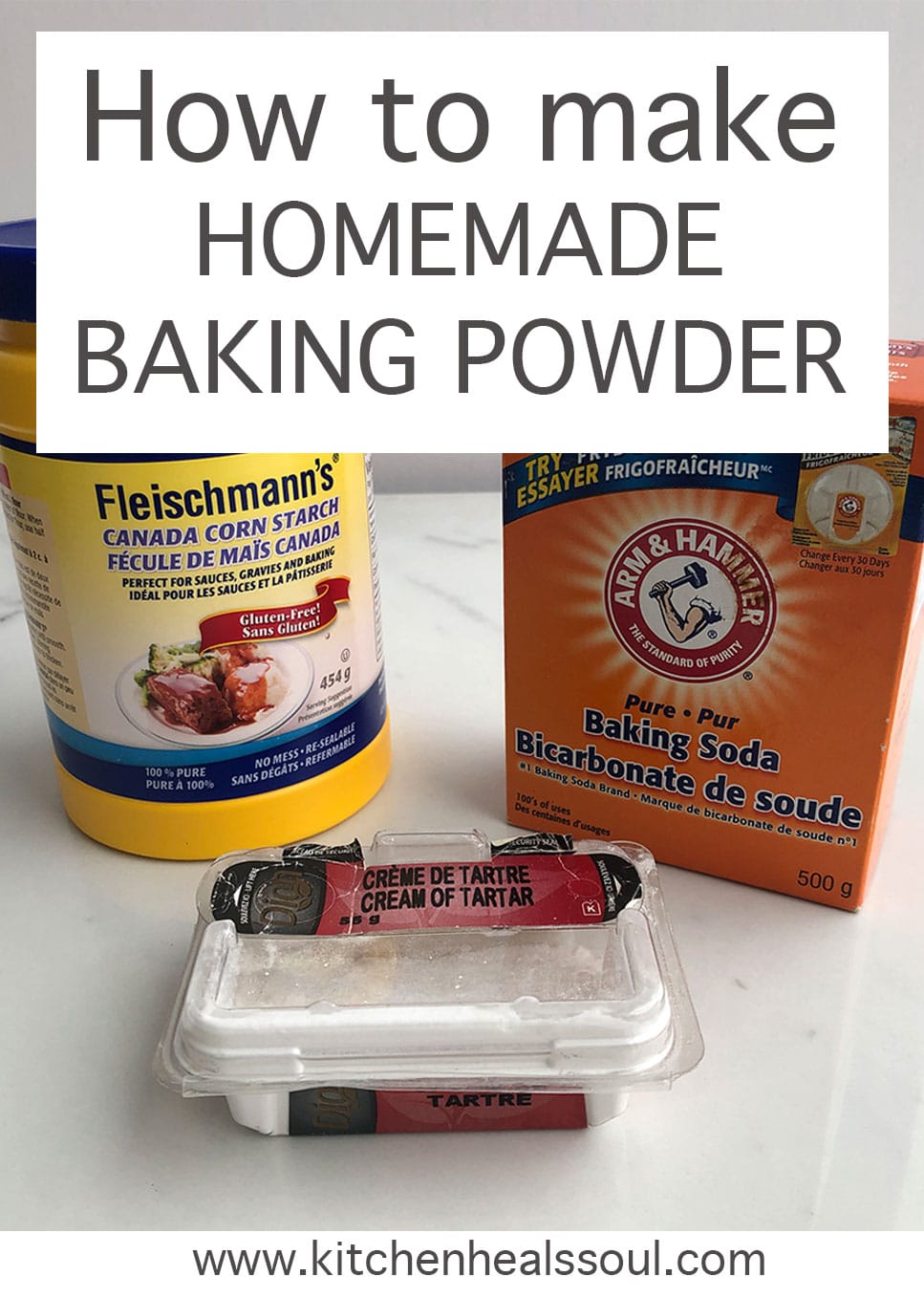
Homemade Baking Powder Formula
This homemade baking powder recipe comes in handy when you're out of commercial powder or need a quick solution. It’s simple to make and can save you a trip to the store in a pinch. Just remember, homemade baking powder has a shorter shelf life than store-bought versions, so use it quickly.
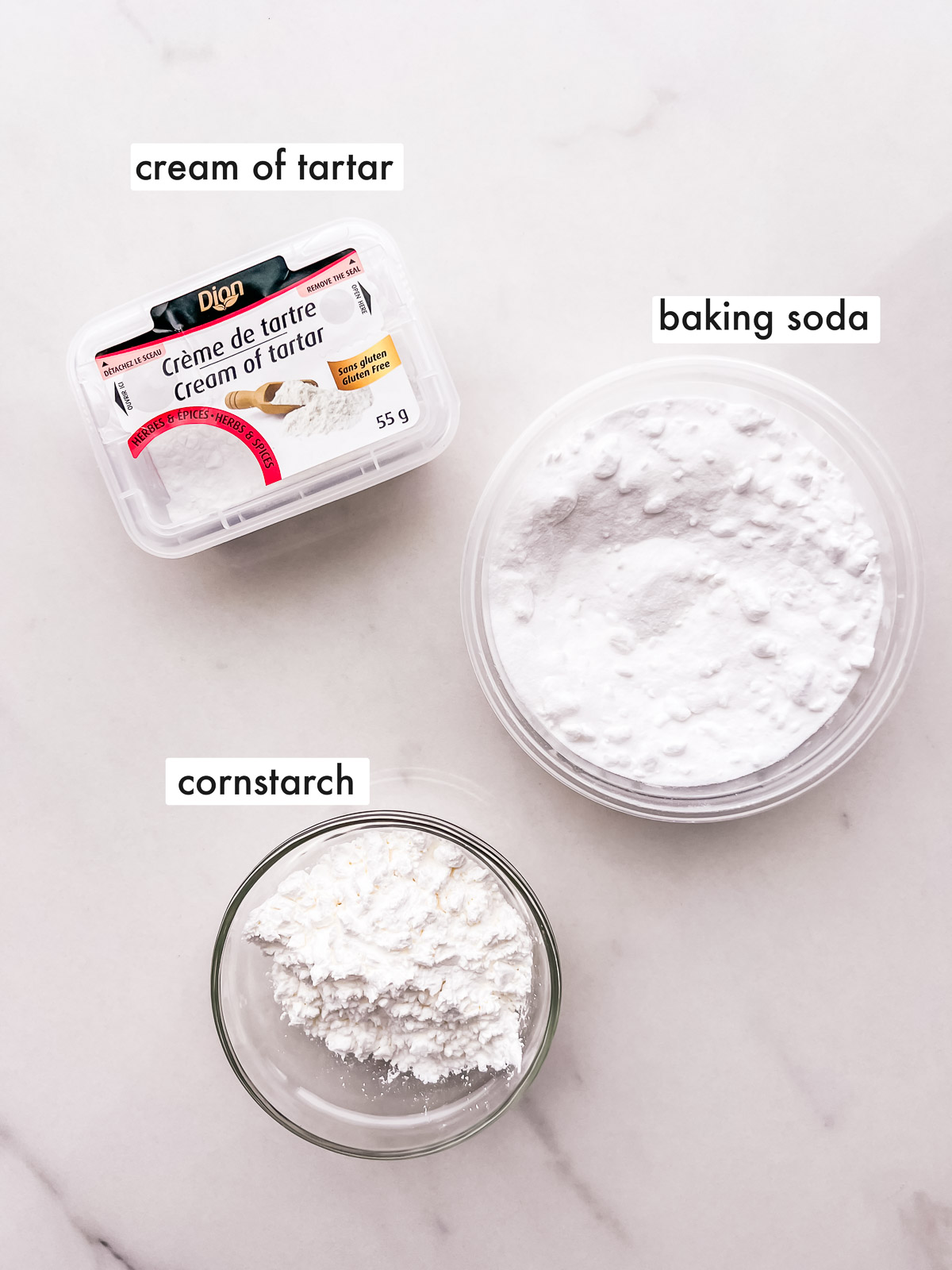
Remember that baking powder is baking soda plus an acid. You can make baking powder from the ingredients you have in your pantry.
While commercial formulas contain the acids monocalcium phosphate, sodium aluminum sulfate, and/or sodium acid pyrophosphate, you probably don't have any of these acid salts in your pantry. The main dry acid that you most likely have at home if you bake and that you could use to make baking powder is cream of tartar (i.e. tartaric acid, which is also known as potassium bitartrate).
Cream of tartar is a white powder that you probably have used when making meringues for an Italian meringue buttercream, or in egg-white-based desserts like these chocolate pavlovas. And combined with baking soda and a little cornstarch, you have yourself some homemade baking powder. Here's the recipe.
Note: you probably won't save much money by making baking powder at home because cream of tartar tends to be quite expensive.
📖 Recipe
Homemade Baking Powder
Ingredients
- 30 grams baking soda
- 70 grams cream of tartar
- 15 grams cornstarch
Instructions
- Whisk the ingredients in a bowl.
- Transfer the homemade baking powder to a Mason jar and store with a tight-fitting lid.
Notes
- Variations on homemade baking powder recipe:
- the above homemade baking powder recipe comes from Paula Figoni's How Baking Works (available for purchase from Amazon) and I have done the math to make sure that the amount of cream of tartar and baking soda will balance out correctly.
- Shirley Corriher, in the book Bakewise, recommends a different ratio, specifically: 14 grams baking soda + 18 grams cream of tartar + 15 grams cornstarch. Her book is also available on Amazon. Chemistry-wise, I don't think this ratio adds up. I wouldn't follow Corriher's recipe for baking powder.
- Alton Brown suggests a ratio for homemade baking powder in his book on baking called "I'm Just Here For More Food," but he doesn't mention if the ratio is by weight or by volume (so use it with caution). After more research, I found the same recipe in the textbook "On Baking" which mentions the recipe is by volume: 2 parts cream of tartar, 1 part baking soda, 1 part cornstarch. Alton Brown's baking book can be purchased from Amazon. The textbook On Baking is also from Amazon. To me, this ratio is also flawed. I would still stick with the recipe from Figoni's How Baking Works.
- Storage: Given how fast-acting homemade baking powder is and given that baking powder will lose potency if exposed to moisture, it's important to store it in a cool, dry place, in a closed container that has a good seal to make sure moisture doesn't get in. Commercial baking powder is slower to react than homemade baking powder, so the baking powder you buy at the store is more stable and will stay potent for longer than homemade baking powder.
- While it's good to know how to make baking powder at home if you run out of it at the last minute, I wouldn't depend on this recipe long term. You can check to ensure your baking powder is still good, but these tests aren't a measure of potency, so take the results with a grain of salt.
Nutrition
Substitutions
The obvious substitute is to replace baking powder in a recipe with baking soda and an acid. The acid source you choose will depend on the recipe.
Rule of thumb: Replace 5 mL (1 teaspoon) baking powder with 1.25 mL (¼ teaspoon) of baking soda plus an acid for every 125 grams (1 cup or 250 mL) of flour.
As a general rule, if the recipe includes a liquid ingredient like milk or water, you can use a liquid acid like vinegar or lemon juice. If the recipe is dry, like for cookies, opt for a dry acid such as cream of tartar. So:
- in recipes like cookies where you don't want to introduce a liquid, use a dry acid (powder) like cream of tartar (potassium bitartrate) or citric acid
- in recipes like cakes and muffins where you can introduce a liquid, use
- an aqueous acid (liquid) like vinegar or lemon juice (note that aqueous means that the acid is dissolved in water)
- acidic dairy (liquid) like buttermilk, acidified milk, yogurt, crème fraîche, or sour cream
The easiest place to use the combination of baking soda and an aqueous acid or acidic dairy would be in a cake recipe. For example, this eggless chocolate cake recipe relies on baking soda and vinegar to rise!
Any time you want to incorporate an acidic liquid ingredient, ideally, you should replace another liquid ingredient in your recipe. For example, you could do the following combination to ensure your cakes will rise well:
- replace the milk in a cake recipe with buttermilk (cup for cup)
- replace the baking powder with baking soda: 5 mL (1 teaspoon) baking powder with 1.25 mL (¼ teaspoon baking soda).
Using a liquid acid will not work in most cookie recipes. For example, if you are replacing baking powder in this chocolate crackle cookies, you will quickly realize there isn't a liquid like milk in the recipe that you can easily replace with buttermilk or yogurt. A liquid acidic ingredient will not work in this recipe, and you are much better off replacing the baking powder with a combination of baking soda and cream of tartar.
Baking powder substitutions are possible but choose the acid you work with carefully. Got a question? Use the comment box below to ask your questions about baking powder and baking powder substitutions.
⁉️ Baking Powder FAQs
Just like too much baking soda is a problem (causing cakes to brown too much, giving baked goods a soapy taste, toughening cakes, etc.), too much baking powder may cause textural issues in cakes, off flavours, and doesn't make a better cake. Make sure to use the right techniques for measuring ingredients in baking, especially small quantities of leaveners.
Too much can add a weird taste, verging on bitter or "chemical" tasting. It can also cause too much gas to be released in your cake batter as it bakes, leading to larger bubble formation and large holes in your cakes These may bubble up on the surface of the cake as it bakes and cause your cakes to sink or collapse on themselves leading to shorter cakes or sunken cakes. Overleavened cakes will puff and fall, sinking down into the pan before they've done baking. There's no recovery when this happens.
Yes, you can if it was stored properly in a cool, dry place. Proceed with caution though. If the container was open for several years and exposed to humidity, it may be better to replace it, rather than risk wasting ingredients and time. Use the test outlined above to check that your leavening agent is still active. And when in doubt, just replace it.
📚 Further Reading
- How Baking Works, 3rd edition. Paula Figoni. Buy it on Amazon
- Bakewise. Shirley Corriher available on Amazon
- On Baking: a textbook of baking & pastry fundamentals. Third edition update. Sarah R. Labensky, Priscilla A. Martel, Eddy Van Damme. Available on Amazon.
- I'm Just Here for More Food. Alton Brown's baking book can be purchased from Amazon
Carol l says
Hello. I found this website to make homemade baking powder: I can't have carbs, so wondering what I could substitute for the cornstarch/arrowroot? Neither are ok for me to consume.
Also, are both aluminum free?
thank you for the help and nice post.
Janice says
Hi Carol,
That's a tough question! The cornstarch in the formula is to help keep the mixture clump-free, among other things, but it doesn't play a role in the chemistry. I would honestly skip the cornstarch if you can't use it. Just know that every teaspoon of your homemade baking powder will be slightly more potent and reactive.
As for your question about aluminum, neither baking soda nor cream of tartar contains aluminum, so yes, this recipe makes aluminum-free baking powder! I hope this helps!
Janice says
Hi Carol,
I had another thought about homemade baking powder without cornstarch that I forgot to mention! Cornstarch doesn't play a role in the reaction, but it is an important ingredient in the product that makes baking powder shelf stable! If you make homemade baking powder without cornstarch, it won't last as long because the baking soda and cream of tartar powders will react a little faster without that starch that acts as a buffer. Historically, baking powder used to be sold to consumers in two separate containers (one of baking soda and a separate bottle for cream of tartar) and the two were mixed by the baker at home when baking! Here's a reference on the development of baking powder that mentions cornstarch (when and why it was added) https://www.acs.org/education/whatischemistry/landmarks/bakingpowder.html#development-of-baking-powder
Gail says
Hi janice.
This article is fantastic. Now i know why my cake has failed.
I was having a problem when i changed the brand of my baking powder from the one similar to Magic Baking Powder ingr to Fleischmann's. I use the same measurment, but my cake turned out to have bigger air pockets and sunken in the middle with fleischmanns. It was a chiffon cake, I use 454g of cake flour to 34g of baking powder. How much less of baking powder do i use? I hope you can help me. Thank you.
Janice says
Hi Gail, I’m so glad you found the article helpful! Based on the amount of flour you have, it does seem like you have too much baking powder, but it’s hard to say without seeing the entire recipe. I’d likely halve the amount, so try 17 grams, and see how the cake does. That could still be too much, but I think it’s a pretty decent guesstimate based on the flour quantity. Your eggs will also contribute to leavening, which is why I think it’s possible you might need even less, perhaps 10 grams. That would likely be my next attempt if 17 grams proves to be too much still. Good luck! And please let me know how it goes and what works in the end! Good luck!